How to automate request handling with a Telegram bot
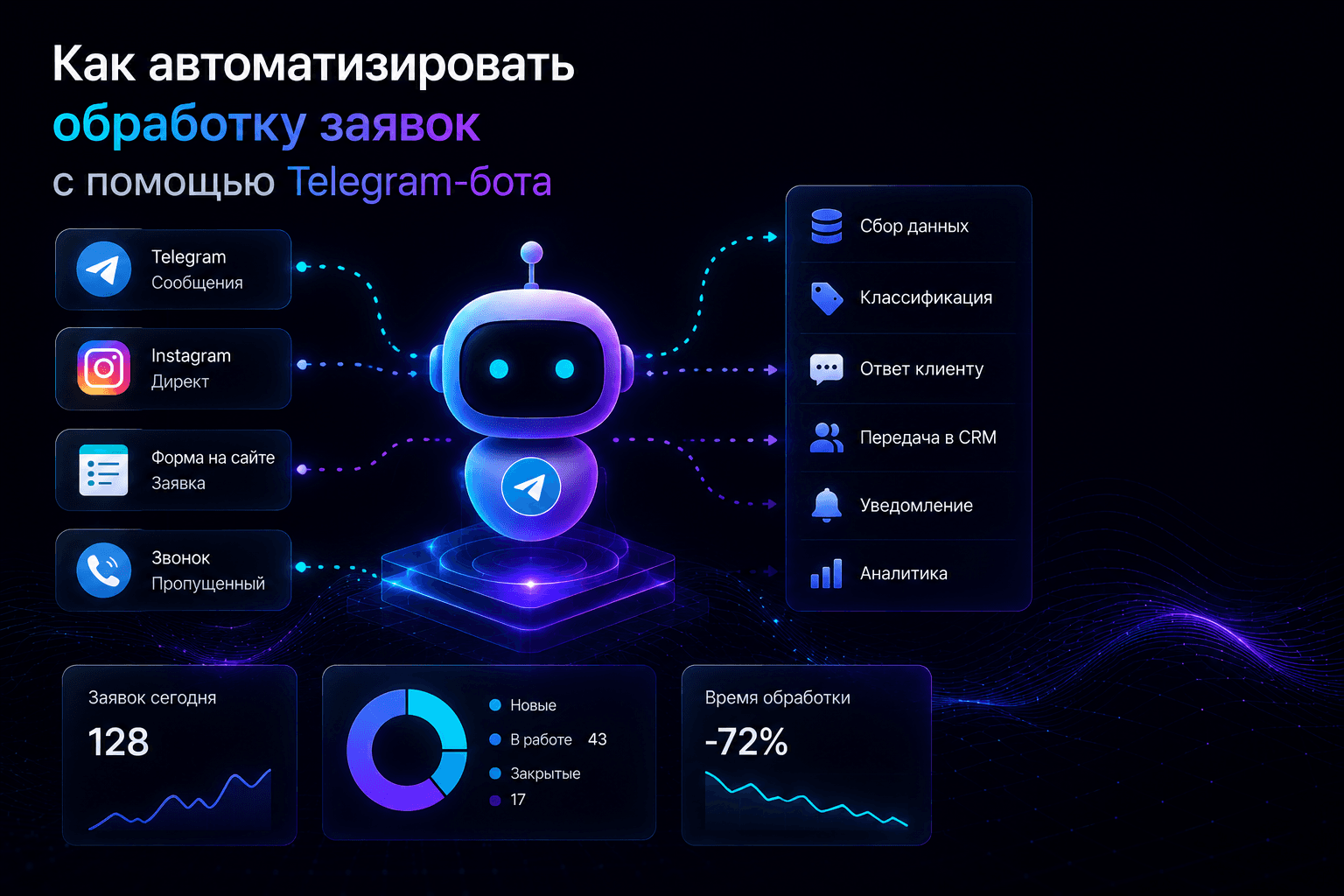
A Telegram bot is the cheapest way to take routine inbound-request handling off your managers without losing anything. Here's the path from scenario to CRM integration that we walk with clients in 1–2 weeks.
Step 1. A scenario, not “message us”
First we design the dialogue: what data to collect (name, contact, the task, budget), where the branches are, what to do with an atypical request. A good bot asks the minimum number of questions and doesn't feel like a form — short steps with buttons convert better than one big field.
Step 2. Capturing and validating the request
The bot validates the contact (phone/email/username), won't let empty fields through and confirms receipt right away. At the same step it picks up UTM tags and the source, so you can later see which channel brings in requests.
Step 3. CRM integration
Every request goes automatically into Bitrix24 or amoCRM as a deal with filled-in fields and a source tag. At the same time the manager gets a notification in the work chat — the request isn't lost even if the CRM is unavailable for a minute (we add retries and a queue).
Step 4. Payments right inside the bot
If the product allows it, we add payments inside Telegram via YooKassa or CloudPayments. The customer goes from question to payment without ever leaving the messenger — which noticeably lifts conversion.
Step 5. Analytics
We feed events (start, funnel steps, submission, payment) into end-to-end analytics. You can see at which step people drop off, and improve the scenario based on data rather than gut feeling.
Read next
 AI & automation
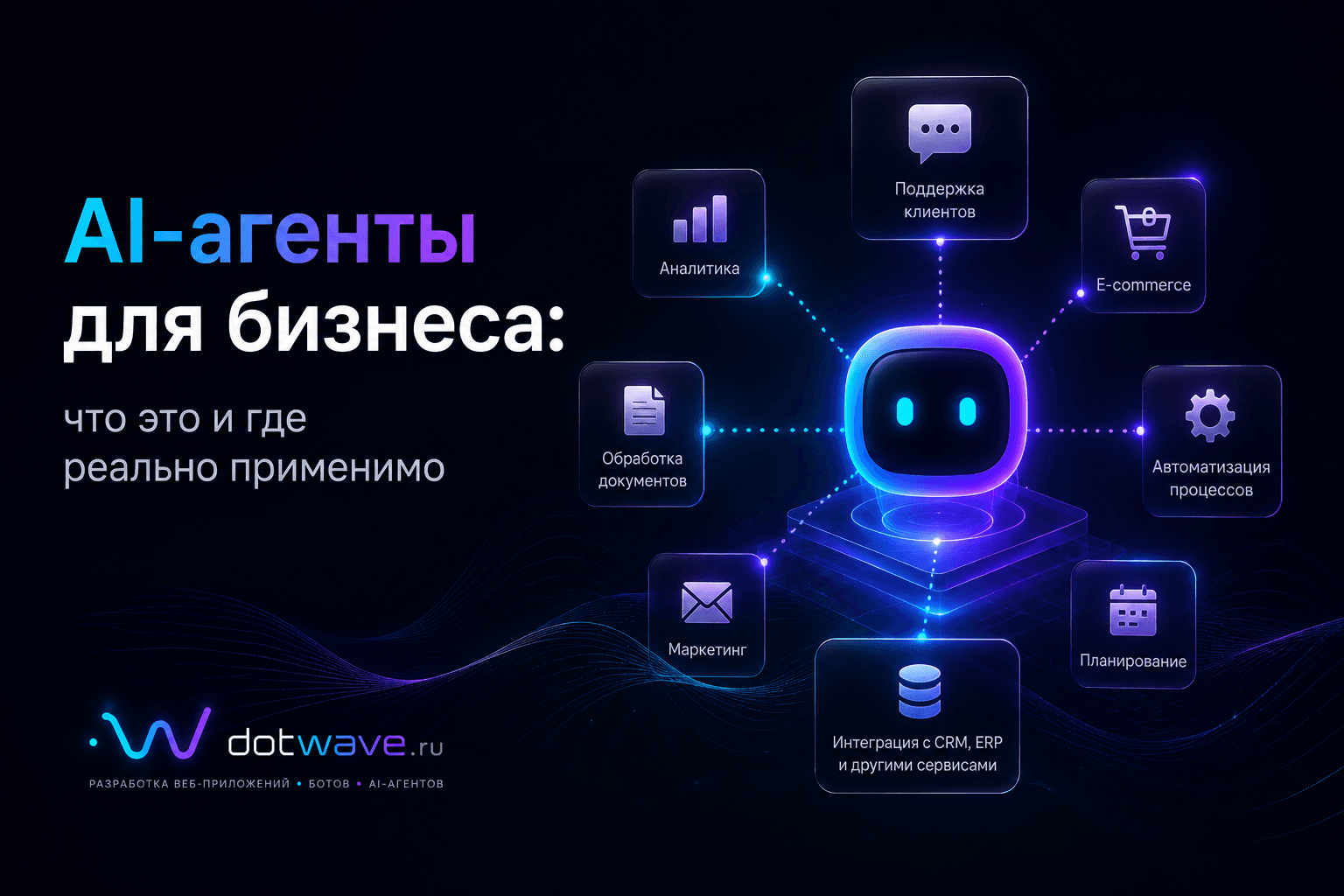
AI agents for business: what they are and where they actually fit
How an agent differs from a chatbot, what tasks it handles and how to estimate ROI.
 Development
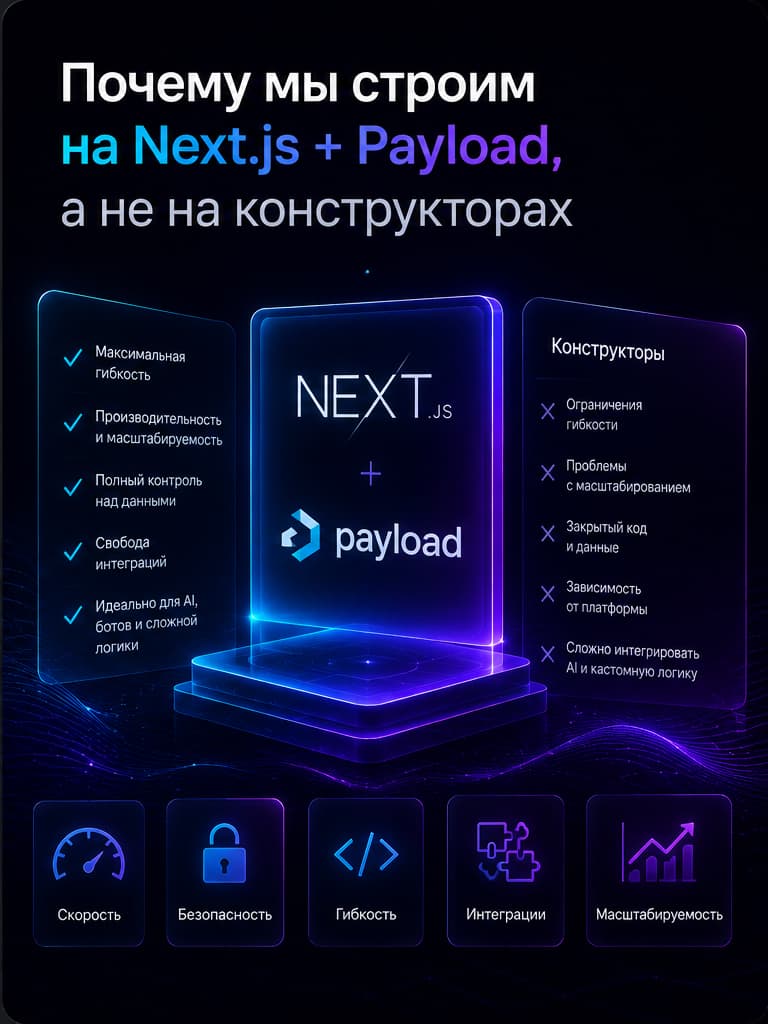
Why we build on Next.js + Payload, not website builders
Speed, control and SEO — a look at the stack that handles growth.
Tell us about your task
We reply within a few hours during business hours. On the brief we turn the idea into a clear scope, a prototype and a release plan.